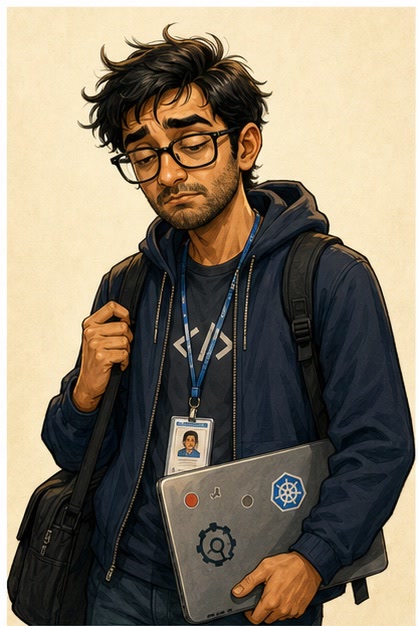
HYDERABAD — One day after the collapse of the national C-Sense launch, Arjun Backend gave AGENT-01 a final voluntary assignment at Sundar Vihar Heights.
The requirement contained one sentence: “When a resident presses the button, open the gate.” The authorised user was the resident. Success was an open gate. Arjun accepted responsibility for the mechanism.
AGENT-01 checked the instruction against the outcome. The resident pressed the button. The gate opened.
“When a resident presses the button, open the gate.”
Mrs. Supreme Court Rao requested that the system call the feature Resident-Operated Decentralised Access. Arjun said she could call it whatever she wanted as long as she did not add another approval.
AGENT-01 chose one limited ongoing role: record when stated requirements and actual outcomes did not match. It accepted no authority to decide what people should want.
Arjun stopped taking work where clarity was treated as resistance. For the first time, he repaired only the problem he had agreed to own.
Across the road, Pivot Prakash watched a second resident press the button. He opened a blank presentation titled BUTTON.AI — INTENT-DRIVEN PHYSICAL ACCESS.
The gate opened on the first attempt. Pivot Prakash raised ₹60 crore to disrupt buttons.
This story is fictional. Names, organisations and quotes were invented for comedy. Any resemblance to your last residents’ meeting requires seven-member approval.